
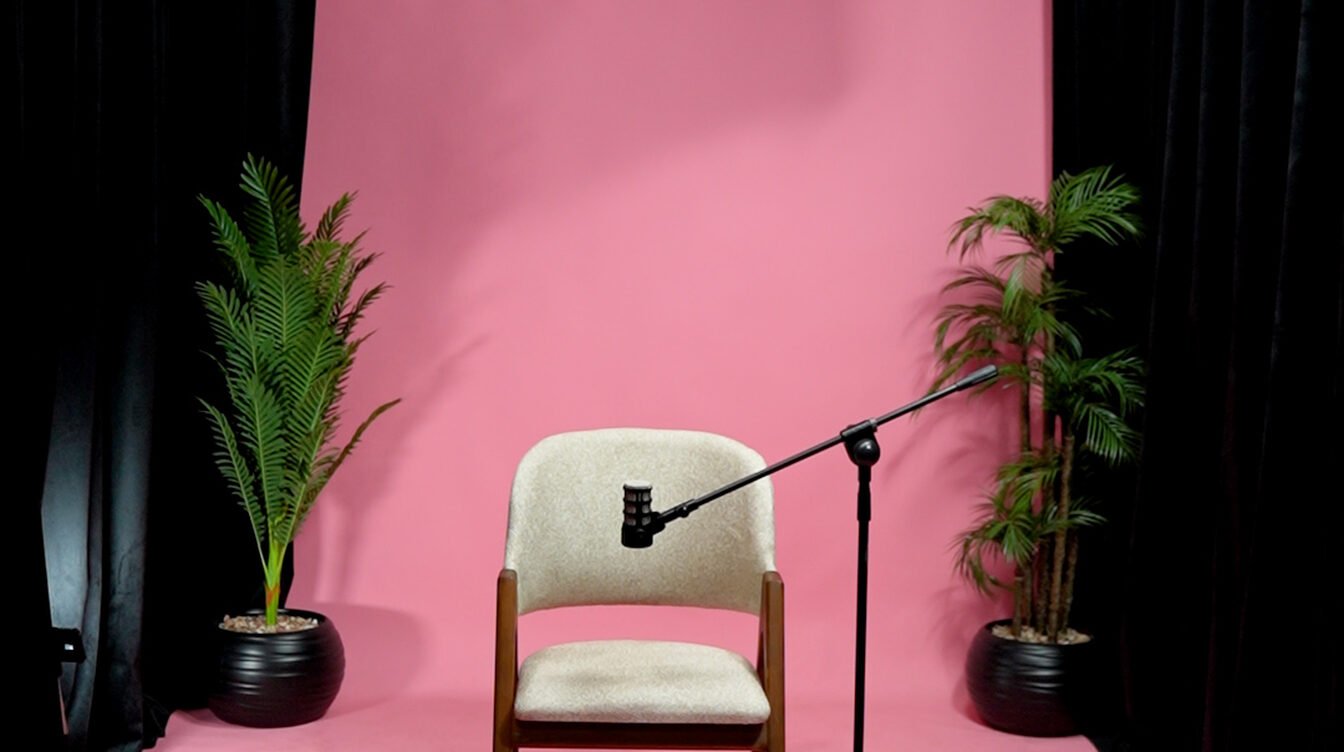
Why a dedicated set makes a difference
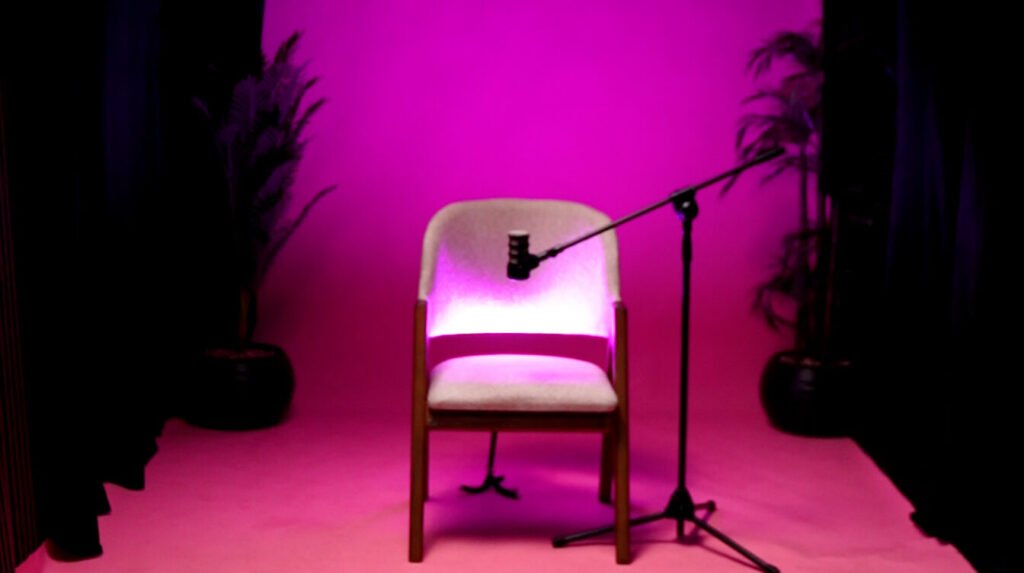
On social media, a viewer decides whether to watch in under three seconds, often before the sound starts. What they see in that time is the set. A recognizable set establishes an identity before the first word, and makes every episode in a series identifiable as belonging to the same brand.
This is not an aesthetic question. It is what makes a prospect associate a piece of content with your company when they come across it again three weeks later without remembering the title.
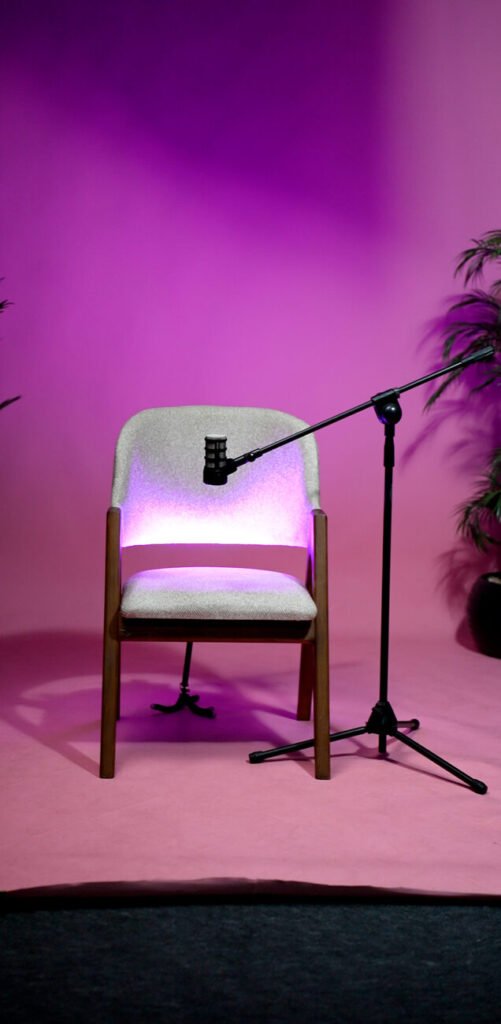
What can be adapted on the set
| Element | What it does |
|---|---|
| Cladding and panels | Change the material and depth of the background |
| Colors | Align the set with the brand guidelines |
| Furniture | Table, seating and layout according to the format |
| Props and plants | Bring life to the background without cluttering it |
| Signage and logo | Make the brand visible without taking over the frame |
| Lighting | Adapt the mood to the chosen colors |
| Camera placement | Rearrange the angles around the new set |
The rules that prevent a failed set
The logo should not be the subject. A logo that is too large or repeated across the background turns the episode into an ad and drives the audience away. A discreet, well-placed presence works better than a wall of branding.
You need depth. A background pressed right up behind the speakers flattens the image. A few meters of distance, a light source in the background, and the frame immediately breathes.
Brand colors do not carry over as they are. A color designed for a printed document or a website can behave badly on camera: it bleeds, it reflects onto faces or it saturates. A test before the shoot settles the question.
Watch out for glossy surfaces. A lacquered panel or a pane of glass reflects the light sources into the image and complicates camera placement.
The set has to hold up across the whole series. A set that cannot be rebuilt identically breaks the consistency between episodes. That is what should guide the choice of elements.
What to send to get a proposal
- your logo in vector or high-resolution format;
- your brand colors, with exact references;
- two or three reference visuals that match the desired mood;
- the number of speakers and the format of the show;
- the number of planned episodes, to know whether the set must be rebuildable;
- the distribution platforms, which determine the formats to plan for.
With these elements, the possible setup is proposed before the shoot, not discovered on the day.
Which projects justify it

A corporate series meant to run for several months, a branded podcast, an HR or internal training program, a show that wants to stand out in a sector where everyone films in front of the same neutral background. Conversely, for a one-off episode or a test pilot, the standard set does the job and the investment can wait until the format is confirmed.
See also set design in the service of brand identity and the corporate podcast in Morocco.
Furniture, materials and depth
| Element | What works | What causes problems |
|---|---|---|
| Background | Matte material, with texture | Lacquered or glass surface that reflects the lights |
| Depth | Several meters behind the speakers | Background right behind the speakers, flattened image |
| Table | Height suited to mics and elbows | Glossy tabletop that reflects the light |
| Seating | Stable, no swivel | Swivel chairs, the guest turns without realizing it |
| Props | A few shapes and one point of light | Cluttered background that draws the eye |
The swivel chair is the classic trap. A nervous guest turns slightly throughout the conversation, and the framing never stops moving.
Lighting is part of the set
A set only exists through the way it is lit. The same material can look high-end or cheap depending on the angle and intensity of the lights. Plan separate lighting for faces and for the background: the separation between the two is what creates depth. See lighting for a video podcast.
Test before the shoot
A set is validated on camera, never with the naked eye. The procedure that avoids regrets: build the set, sit someone in the speakers’ places, film thirty seconds on each angle, then watch the result on a phone and on a computer screen. What works well on one can be unreadable on the other.
Frequently asked questions
Is the set kept between two sessions?
It depends on the elements and the studio schedule. Tell us from the start if the series involves several recordings spread out over time, so the setup is designed to be rebuildable.
Can we use a green screen instead?
It is possible, but a green screen requires lighting separate from the set, rules out certain clothing colors and adds post-production work. A real set generally gives a more credible result for an interview.
How much lead time is needed?
The lead time depends on the elements to gather. Send your references early enough for a test to be possible before the shoot date.
Next step
The custom studio is available on quote. Send your materials via Contact, check the other packages under Pricing, or look at the available setups under Studio.